<?xml version="1.0" encoding="utf-8" ?>
<rdf:RDF xmlns:rdf="http://www.w3.org/1999/02/22-rdf-syntax-ns#" xmlns:dc="http://purl.org/dc/elements/1.1/" xmlns:syn="http://purl.org/rss/1.0/modules/syndication/" xmlns="http://purl.org/rss/1.0/">


<channel rdf:about="https://dev.kahea.org/search_rss">
  <title>KAHEA</title>
  <link>https://dev.kahea.org</link>

  <description>
    
            These are the search results for the query, showing results 1 to 2.
        
  </description>


  <image rdf:resource="https://dev.kahea.org/logo.png"/>

  <items>
    <rdf:Seq>
      
        <rdf:li rdf:resource="https://dev.kahea.org/blog/critcal-habitat-critical-discussion"/>
      
      
        <rdf:li rdf:resource="https://dev.kahea.org/blog/monk-seals-competing-with-fishing-industry-for-food"/>
      
    </rdf:Seq>
  </items>

</channel>


  <item rdf:about="https://dev.kahea.org/blog/critcal-habitat-critical-discussion">
    <title>Monk Seals: Critcal habitat, Critical discussion</title>
    <link>https://dev.kahea.org/blog/critcal-habitat-critical-discussion</link>
    <description>In the last few weeks, we’ve received letters of strong support and strong opposition to the proposed rule on critical habitat for the Hawaiian monk seal. We hope this blog will open up some safe space for discussion.</description>
    <content:encoded xmlns:content="http://purl.org/rss/1.0/modules/content/"><![CDATA[<p><span id="internal-source-marker_0.18010315820179712">In the last few weeks, we’ve received letters of strong support and strong opposition to the proposed rule on </span><a class="internal-link" href="resolveuid/2d24fe8160e1f790422eddd08d3574ce"><span>critical habitat for the Hawaiian monk seal</span></a><span>.  The advocacy we do is grassroots and participatory at its heart, and we  are grateful to everyone who took the time to write. Advocacy by its  nature means taking up a position on a policy and vision -- positions  that can be controversial, and open up community disagreement even  within our KAHEA ‘ohana. I am writing this blog to help clarify why we  so strongly support critical habitat for monk seals, how it’s different  from seal translocation, and why we believe these protections will  ensure a better future for beaches and nearshore ocean areas for </span><span>everyone </span><span>in Hawai’i.</span><span></span><br /><span></span></p>
<p>A comment typical of some we have received is this one:</p>
<p style="padding-left: 30px; "><i><span>We  are very disappointed that you are sponsoring 1 or 2 bills to bring  more monk seals to Hawaii and/or to make Hawaii a critical habitat for  monk seals.  We have had many, many negative experiences with the seals  taking our catches from our lines, in our bags, our nets and chasing  fishermen. It's not that we have no sensitivity to the seal, who has  many, many laws and organizations protecting them that they will most  likely survive, it is just more important to us to be able to feed our  Children and Grandchildren and future generations.</span><span> </span></i><br /><span></span></p>
<p><span>We understand and don’t dispute that monk seals have become competitors to subsistence fishermen and sympathize with the sad situation of having to compete for limited resources, but we are hoping that critical habitat will prevent projects that will hurt the health of our nearshore fisheries. It will restrict the construction of any projects that receive federal money or permitting on shorelines identified as critical habitat. </span><span>This is where monk seals and local fishers may be in the same boat.<span style="padding-left: 0px; "> Poorly planned shoreline development increases coral-killing run-off, sedimentation, and pollution.</span> Dead coral means dead reefs full of wana instead of fish. The critical habitat rule could force some developers into consultations with NMFS, who, ideally, would identify these adverse impacts on fisheries (monk seal food) and correct the project. In this way, <b style="padding-left: 0px; ">protecting monk seal habitat means protecting fishing resources for other species, like fishers who want to feed their children for generations</b>.</span></p>
<p><b>Critical habitat does not import seals. </b><span>Translocation of  monk seals (from the NW Hawaiian Islands, to the Main HI) is a different proposal from critical habitat. <span> </span><span>Critical habitat protects the beach from projects that are federally permitted or funded, both for monk seals and fishermen (and other beachgoers).</span> Translocation is capturing monk seal pups from the NW Islands and bringing them to the Main Islands -- to eat -- with the intent of re-capturing them and returning them to the NW Islands after a few years.  The jury is still out at KAHEA whether translocation is a good idea, b</span><span>ut we all definitely agree, NMFS must be more forthcoming about the extent to which the Critical habitat rule and the translocation proposal are related</span><span>.  KAHEA began pushing for critical habitat over three years ago, long before translocation was ever offered up as an actual possibility. </span></p>
<p><span></span><span>It is true, monk seals are showing up more and more in the Main  Hawaiian Islands, possibly the result of the collapse of fisheries like  the slipper and spiny lobster in the Northwestern Hawaiian Islands.  These fisheries were  finally closed in 2000, but the lobster numbers have not since bounced back, and  neither have those of the monk seal. </span><span>It's a sad cycle--man ate their food, so  now they're here eating our food. </span><span dir="ltr" id=":te">Decades of poor fisheries management by WESPAC  has contributed to the unraveling of our ecology, leading to increased  competition for fish.</span><span> </span><span>In addition to  malnutriton/starvation, other threats to monk seals include  entanglements, sea level and temperature rise--all problems created by  man. The result is that <b>people who eat from the sea and monk seals who eat from the sea are  both suffering</b></span><span>. </span></p>
<p><span>Without critical habitat, competition between seals and ocean users will likely only increase in the future. Poorly planned developments would continue to be allowed along our shorelines, diminishing the overall quality of our resources and leaving less to share amongst us all.  We support critical habitat because is one solid step towards controlling a threat to the survival of both seals and people who rely on the ocean. </span></p>
<p><span></span>Another typical comment:</p>
<p style="padding-left: 30px; "><i><span>You  and you organization are costing the taxpayers lots of money and are  assisting the federal government in their desire to take away even more  from the Hawaiian People.</span></i></p>
<p><span>Critical  habitat does not take away land from Hawaiʻi's people and it cannot be  used as a basis for limiting public access to beaches or stopping people  from shorecasting or anything like that.  Basically, if you don't need a  federal permit to do what you are doing now, then critical habitat will not  affect what you are doing once it is established. </span><span></span><br /><span></span><br /><span>We  support critical habitat for the monk seal because it is a solid and  inexpensive step towards helping the monk seal actually survive -- at  the same time it protects our shorelines and nearshore waters from inappropriate  development and general misuse that are permitted or funded by the federal government. <b>While we agree  that monk seals have become nuisances to fisherman, we don’t think they  should be forced into extinction. </b> We support critical habitat because we believe extinction is a heavy thing and a very real possibility facing the Hawaiian monk seal.</span><br /><span></span><br /><span>We encourage your feedback.  And regardless  of what side of the issue you are on, please submit a comment. NMFS needs  to know about the lack of trust our community has for their actions, and understand the real root of the divide in our community. To submit a  comment, go to </span><span><a href="http://www.regulations.gov/">http://www.regulations.gov/</a>. </span><span>Insert the <b>reference number </b></span><span><b>0648-BA81 </b></span><span>in  the search box. A list of different regulations will come up, look for  monk seals. Click on it and look for the orange button at the top right  to submit a comment. The deadline for written comments is August 31st.</span></p>
<p>E aloha `āina.</p>]]></content:encoded>
    <dc:publisher>No publisher</dc:publisher>
    <dc:creator>Shelley</dc:creator>
    <dc:rights></dc:rights>
    
      <dc:subject>Hawaiian Monk Seal</dc:subject>
    
    
      <dc:subject>National Marine Fisheries Service</dc:subject>
    
    
      <dc:subject>ocean protection</dc:subject>
    
    
      <dc:subject>fisheries</dc:subject>
    
    
      <dc:subject>food</dc:subject>
    
    
      <dc:subject>human footprint</dc:subject>
    
    
      <dc:subject>critical habitat</dc:subject>
    
    
      <dc:subject>sea level rise</dc:subject>
    
    
      <dc:subject>NWHI</dc:subject>
    
    
      <dc:subject>Monk seal starvation</dc:subject>
    
    
      <dc:subject>marine habitat</dc:subject>
    
    
      <dc:subject>endangered species</dc:subject>
    
    
      <dc:subject>Ocean sustainability</dc:subject>
    
    
      <dc:subject>shoreline protection</dc:subject>
    
    
      <dc:subject>extinction</dc:subject>
    
    
      <dc:subject>marine mammals</dc:subject>
    
    
      <dc:subject>Northwest Hawaiian Islands</dc:subject>
    
    
      <dc:subject>human impacts</dc:subject>
    
    <dc:date>2011-08-21T15:35:00Z</dc:date>
    <dc:type>Blog Entry</dc:type>
  </item>


  <item rdf:about="https://dev.kahea.org/blog/monk-seals-competing-with-fishing-industry-for-food">
    <title>Monk Seals Compete with Fishing Industry for Food</title>
    <link>https://dev.kahea.org/blog/monk-seals-competing-with-fishing-industry-for-food</link>
    <description></description>
    <content:encoded xmlns:content="http://purl.org/rss/1.0/modules/content/"><![CDATA[<script type="text/javascript" src="http://s0.wp.com/wp-content/plugins/adverts/adsense.js?m=1253160243g&1"></script><p><em>From Melissa:</em></p>
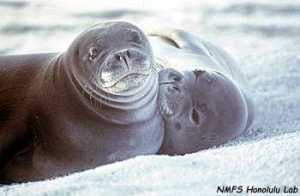
<p>Much is being done in the way of critical habitat designation to ensure the survival of the Hawaiian monk seal. Is it<img src="/kahea/kahea/images/twoseals2.jpg" title="twoseals" height="196" width="300" alt="twoseals" class="alignright size-medium wp-image-797" /> enough though? These precious creatures inhabit the Northwest Hawaiian Islands (NWHI) and are at high risk of becoming extinct due to death caused by starvation, predation, males accidentally killing females in the mating process and entanglement in fishing gear.</p>
<blockquote><p>NOAA decided last year the Caribbean monk seals had become extinct, and has observed that the Hawaiian breed has reached a population of about 1,200, declining by abut 4 percent a year during this decade. Federal Judge Samuel King noted nine years ago that it was likely that the fishing industry &#8220;contributes to the starvation of the monk seals,&#8221; but fisheries strongly deny it.</p>
<p>For whatever reason, the seals apparently are not getting enough to eat. Fitted with compact video cameras in a National Geographic project from 1995 to 2002, they were seen dining on a wide variety of crustaceans, squid, octopus and fish, competing for food with large and hungry ulua.</p></blockquote>
<p>Should more restrictions and rules be enforced in the critical habitat of the Hawaiian monk seal? As of today, eight fishing boats based out of Honolulu are permitted to fish in certain areas of the NWHI, one of which, very recently was caught fishing in a restricted area. These vessels catch approximately half of the locally landed bottomfish in Hawaii. By revoking these permits, the fish populations will likely replenish, leading to more food for the monk seals thus less starvation. Could this be the way to go to further protect the monk seals or would it just enrage the fishing industry?</p>
<p>To read the full article follow this link:</p>
<ul><li><a href="http://www.starbulletin.com/editorials/20090615_Do_what_it_takes_to_save_starving_monk_seals.html">Do what it takes to save the starving monk seals</a></li>
</ul><p>To learn more about this issue please follow the link provided:</p>
<ul><li><a href="http://kahea.org/nwhi/monk_seals.php">Hawaiian Monk Seal</a></li>
</ul><!--adcode--><div align="center" style="padding-top: 5px; text-align: left;" class="adcode">
<script type="text/javascript"><!--
google_ad_client = "pub-3443918307802676";
google_ad_output = "js";
google_feedback = "on";
google_max_num_ads = "4";
google_ad_width = 336;
google_ad_height = 280;
google_ad_format = "336x280_as";
google_image_size = "336x280";
google_ad_type = "text,flash,html";
google_ad_channel ="7770228814+6875057225+7401333398+7453468586+7814133392+7250744022";
var color_bg = 'ffffff';
var color_text = '000000';
var color_link = '265E15';
var color_border = 'ffffff';
var color_url = '265E15';

google_analytics_domain_name = "none";
//--></script><script type="text/javascript" src="http://pagead2.googlesyndication.com/pagead/show_ads.js"></script></div>
<div style="clear: both"><br /></div>
<!--/adcode-->
									]]></content:encoded>
    <dc:publisher>No publisher</dc:publisher>
    <dc:creator>melissakolonie</dc:creator>
    <dc:rights></dc:rights>
    
      <dc:subject>1</dc:subject>
    
    
      <dc:subject>Hawaiian Monk Seal</dc:subject>
    
    
      <dc:subject>Monk seal starvation</dc:subject>
    
    
      <dc:subject>Northwest Hawaiian Islands</dc:subject>
    
    
      <dc:subject>conservation</dc:subject>
    
    
      <dc:subject>environmental justice</dc:subject>
    
    
      <dc:subject>fishing industry</dc:subject>
    
    
      <dc:subject>ocean protection</dc:subject>
    
    <dc:date>2009-06-23T23:36:19Z</dc:date>
    <dc:type>Blog Entry</dc:type>
  </item>


</rdf:RDF>